Meeting the Meter Without the Dread: A Small Weekly Ritual for Winter
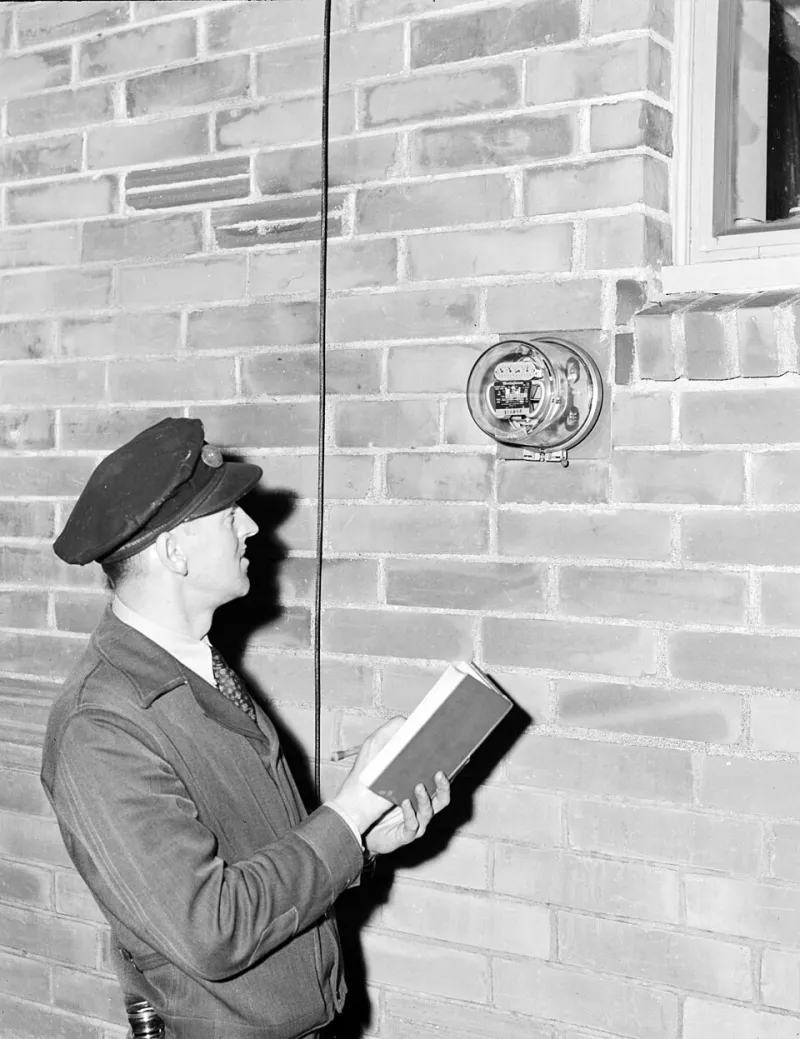
Photo: Seattle Municipal Archives from Seattle, WA, CC BY 2.0, via Wikimedia Commons
There's a cupboard in a lot of UK homes that we quietly avoid between November and March. Maybe it's under the stairs, maybe it's a grey box on the hallway wall, maybe it's a little cabinet outside by the door. Inside is a number that tells you something about your winter. And for many of us, that number has become tangled up with dread.
This is not an article about spreadsheets. It's not about comparing tariffs or becoming a person who knows what a kilowatt-hour is. It's about a minute. One minute, once a week, with a cup of tea afterwards. The meter-reading minute is a grounding habit, not a budgeting audit.
The flinch is normal
Winter energy bills in the UK have a way of arriving like weather. You know they're coming, you can't quite predict the shape of them, and there's a particular kind of low-level worry that lives in the background from October onwards. For some people it's a passing thought. For others it's a tightness in the chest when the heating clicks on.
The flinch often comes from not knowing. When a number stays hidden, it grows. We imagine the worst. We tell ourselves we're being irresponsible, or wasteful, or that everyone else has it figured out. None of that is useful. A meter reading isn't a judgment. It's just information — and information, gently handled, tends to shrink fear rather than feed it.
The ritual itself
Pick a day. Sunday evening works for a lot of people because it's already a natural pause before the week starts. Or a Wednesday morning, or whenever you're usually home and awake. The day matters less than the repetition.
Here's the whole thing:
- Open the meter cupboard. Look at the number. If it's a smart meter, glance at the in-home display instead.
- Write the number down somewhere simple — the back of an envelope, a note on your phone, a small notebook that lives near the kettle. No need for columns or formulas.
- Close the cupboard.
- Make a cup of tea. Sit down for a minute. That's the reward, and it's not optional.
That's it. You don't have to calculate anything. You don't have to compare it to last week unless you want to. The point is simply to meet the number instead of avoiding it.
What you're actually doing
You're building a small bridge between you and something you've been scared of. You're teaching your nervous system that the meter cupboard is not a monster. You're also giving yourself a baseline: if something changes — a leak, a faulty appliance, a cold snap — you'll notice sooner, and you'll have a record that helps you ask better questions.
But the emotional relief is the main event. There's a particular kind of calm that comes from knowing roughly where you stand. It's the same calm as checking your bank balance on a normal Tuesday, or opening the brown envelope instead of letting it sit on the doormat for a week. The number is rarely as bad as the not-knowing.
If you share your home
Money and energy can be tender subjects in shared households. The meter-reading minute works best when it's framed as a shared habit, not an accusation. Here are a few scripts that keep things soft:
- "I'm going to start checking the meter on Sundays — it helps me feel less wobbly about winter. Want to join me for a tea after?"
- "I've been avoiding the meter and it's making me anxious. I'm going to note the reading once a week so it feels less mysterious. No pressure for you to do anything with it."
- "Can we agree to look at the number together once a week? Not to change anything, just so we both know where we are."
The key is to avoid the word "we" when you mean "you". If there's a disagreement about heating or laundry, that's a separate conversation — ideally had over that cup of tea, not in front of the meter.
When knowing turns into needing help
The meter-reading minute is a grounding habit, but it's not a substitute for support. Some signs that it might be time to reach out:
- You feel a rush of dread every time you think about the next bill, and it doesn't fade after you've checked the reading.
- You're avoiding opening post, or you've stopped checking your energy account altogether.
- You're keeping the heating off even when you're cold, or skipping meals to cover bills.
- You're using candles or blankets during the day because you're worried about using electricity.
- You've had a letter you don't understand and you don't know who to ask.
In the UK, there are kind, free places to start. Citizens Advice can help you understand what you're entitled to. StepChange and National Debtline offer free debt advice. Your energy supplier can talk you through payment plans, and they have to offer you a repayment arrangement you can afford. The Warm Home Discount and the Priority Services Register are worth checking. Your local council may have a Household Support Fund. None of this is shameful — it's just the next gentle step.
The tea is the point
It would be easy to read this and turn it into another thing to be good at. Please don't. The meter-reading minute is not a performance. It's a small, repeatable act of care. You look at the number. You write it down. You make a cup of tea. You let the knowing settle.
Winter is long, and the light leaves early. But a minute a week, with a warm mug in your hands afterwards, is a quiet way of saying: I'm here. I'm paying attention. And I don't have to be afraid of the cupboard under the stairs.