The Myth of the Finished Home (and Why Yours Is Already a Nest)
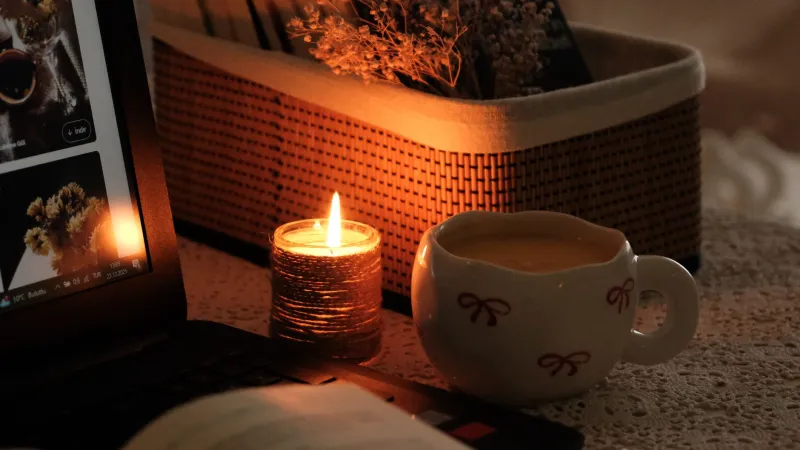
There's a certain kind of photograph that turns up on my feed most Sundays. A kitchen worktop, entirely clear except for one bowl of lemons and a wooden spoon. Linen curtains doing something photogenic. A candle that has never been lit. The caption usually says something about 'creating a sanctuary'.
I have nothing against the lemons. What bothers me is the implication that follows them around — that a home becomes restful once it looks a certain way, and until then, you're behind.
The photograph is not the room
Here is what the photograph doesn't show: the drawer under the worktop, the washing machine mid-cycle, the school bag that has to go somewhere, the fact that somebody in that house is almost certainly looking for a sock.
We've quietly absorbed an idea that nurturing a home is a design project with an end state. Get the storage right, choose the right shade of off-white, sort the cupboard under the stairs, and then you'll be able to relax. Except nobody ever gets there, and the goalposts move every time the seasons change and the shops swap their window displays.
A home isn't a project. It's a place where several people with conflicting needs are all trying to have a Tuesday at the same time.
A nest is made of habits, not objects
Think about what a bird actually does. It doesn't arrange twigs until they look good and then stop. It keeps bringing things in, patting them down, making small adjustments, over and over, for as long as it's needed. The nest is never finished. It's just continually tended.
That's a much more useful model for a house. Nurturing a nest isn't a style. It's a set of small, repeatable acts: putting the cushions back, opening a window, wiping the sides before bed, making sure there's something in for breakfast, changing the towels before they get that smell. None of it is photogenic. All of it is care.
And crucially, none of it requires the house to be finished first. You can do it now, in the house you've actually got, with the sofa you actually own.
A lived-in home is supposed to be loud
Somewhere in the 'calm home' ideal is a fantasy of silence, and silence is a strange thing to aim for in a house with people in it.
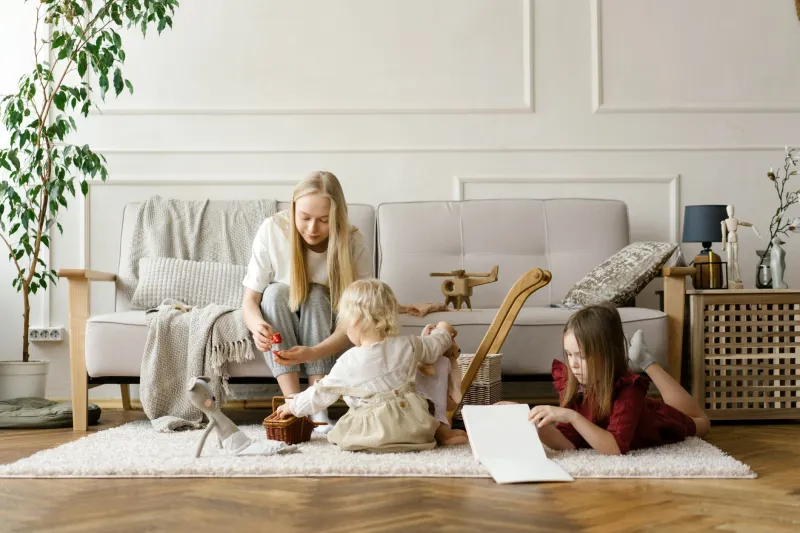
The washing machine on its final spin. Someone practising the recorder badly in the back bedroom. The telly on in one room and a podcast in another. A door that sticks. These aren't failures of atmosphere — they're evidence that the place is being used. A house that echoes is not necessarily restful. Sometimes it's just empty.
What makes a home somewhere people can exhale isn't the absence of noise. It's the sense that you don't have to perform while you're in it. You can come in, put your bag down, be a bit of a state, and nobody minds.
Lowering the bar, kindly
If the 'sanctuary' idea has been quietly making you feel like you're failing at rest, here are some suggestions for loosening its grip. None of them require a trip to Dunelm, though I won't stop you.
Give yourself a 'good enough' clean. Ten minutes, one room, and a clear definition of done: surfaces wiped, floor clear enough to walk on, bin emptied. Not the whole house. One room, ten minutes, and then stop.
Keep one surface clear. Not every surface. One. A kitchen worktop, a bedside table, whatever you look at most. Let everywhere else be honest.
Use the good things. The nice towels, the decent mugs, the candle. Waiting for an occasion means the occasion never comes, and things wear out in cupboards just as fast as they do in use.
Have a landing spot. A basket by the door, a hook, a chair that is officially for bags. It won't stop the clutter, but it stops it migrating to every flat surface in the house.
Let the tidying be a shared act, not a solo performance. Even small children can put shoes in a basket. It won't be done the way you'd do it. Do it anyway.
Notice what you're actually aiming for. If what you want is a house where people can flop, then the standard is 'can people flop?' — not 'does it photograph well?'. Those are different tests, and only one of them matters.
What people remember
Nobody, at the end of a childhood or a decade in a house, remembers whether the hallway was clear. They remember whether there was always something in the biscuit tin. Whether they were allowed to bring friends back. Whether the kitchen was warm at the end of the day and someone was in it.
That's the nest. Slightly overfull, slightly noisy, a bit of a state in places, and quietly holding everyone together through repetition rather than perfection.
Your home doesn't need to be a sanctuary. It needs to be lived in — and if it is, you're already most of the way there.